Part 2 – How Gerald’s Dragon Became the Kingdom’s Secret Weapon

Bringing home a new pet that breathes fire. Can fly. Feed itself by keeping local rats under control while also not appear to travel far so not getting lost. It seemed to be the perfect pet for Gerald’s children. Even made his cleaner less scared about going into the basement.

Everyone loved it when the new pet fired, literally,  its first kill.

But after a while, with a pet that sleeps all day, does not keep the attention of small children for long. The fun of watching it chase the rats stops when it’s no longer able to satisfy its hunger once the rats realise they can live somewhere else and not be hunted.

And once those wings are used to get up on a table and eat the dinner. Well, this makes those who run the home less than favourable to its presence.

So Gerald had only one option. This option would forever change the continent and send shudders further across the seas. Or at least for a while. Gerald took the new pet to work.

Having a wild dragon sleeping most of the day was easy to keep quiet as a mid-ranking officer in the barracks. The cadet booked to Gerald scared easily at the first sight of fire, and once he realised that food kept the creature quiet, it took little encouragement for him to bring food. Even less effort as there was no preparation required.

This was fine for a few days, but the level of food coming to his office did bring suspicions. Just how much raw food can one man eat?

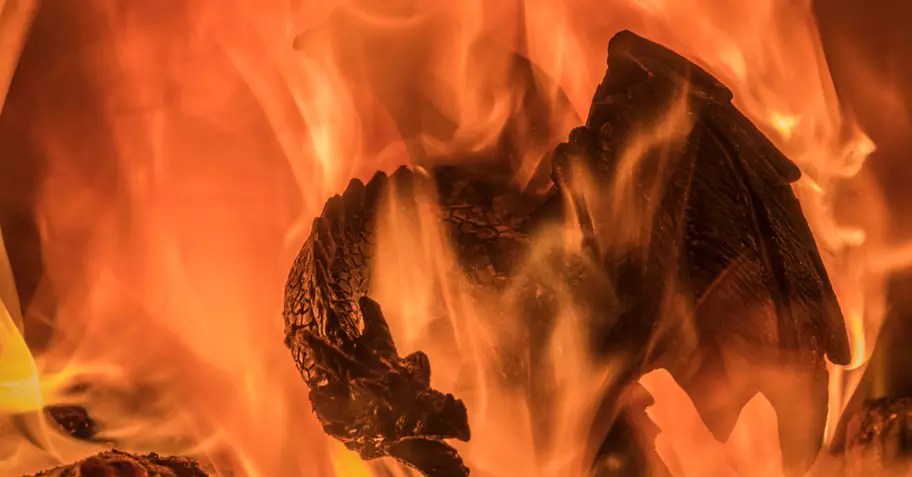
On seeing the fire breathing creature, it quickly became a novelty at the end of hard days, it would be brought out to test what this creature could do. It was within a week that the flying capacity, target hunting and those vicious claws got some in the planning department for the Kingdom wondering if there were more out there.

Before anyone realised the impact on feeding a scavenger animal constantly, an expedition was being formed to see what could be found out about the creature in its natural habitat.

The reports of how easy it was to capture the creature were casually hidden but it’s ability to set fire to a house was casually leaked. The ease of capture came from someone dropping food into a cage, by accident, and 3 darting in. By the time someone thought to close the opening, the creatures were tucking down on the spilt box of food equally, oblivious to their capture. It wasn’t until hours later when one woke from a well-earned nap that the concept of a cage  was even considered by them.

Through fear of being burned alive, the young boys on watch  threw more food in. The concept of bribery was not learnt but those watching them believed it worked.

The burnt out house was more of a bad throw of a living rat that attempting to run away and the fire caught the corner of an old, dried out building. Propaganda was also formed that week, but no name was given to it either.

So it was shortly after 7 months when Gerald showed his unemotional offspring a wild dragon, the rumours about the Kingdoms new weapon were filling the courts of allies, enemies and disinterested.

Feeding them seemed to make them grow bigger. Letting them roam and warm in the sun kept the fire burning, and with the right level of challenge, they appeared to follow instructions. Once the food was shown and quickly given after that is.

The beginning of the domestication of the dragon had begun. Albeit with little guidance, a lack of any plan and a lot of guess work.
– Click here to go to part 3 –

Part 1 – The Unexpected Origin of Dragons

It began with a simple decision. To bring back a gift for a son.

It was never a bold general that the stories tell. Or a mighty King slaying a beast. It was a mid-level leader in training who found a small creature running around, actually it wasn’t even do anything that exciting. The story that’s told, in case you haven’t heard, is one where a general sees a small creature nibbling at his feet. Despite the small statue of the creature, they look down and see the potential. A vision of change. A future where he will lead his people. The bold strategy that will mean his enemies bow down before him. Or despites its small stature, it had gumption. And that’s what the general, or king in some parts, liked.

Gerald, or some similar name long since forgotten, actually was walking around looking for his sword, stumbled over what at first was thought to be a rock. It barely moved and half appeared to notice it was even kicked. This, in the wild, is what dragons do. They sleep most of the day, roll over in the midday sun to warm their bellies, and use the fire inside their bellies to keep them warm at night when it gets cold. As in 13 degrees or so. If ever in single figures they would actually move to be near each other. Or a cave.

If they have one purpose, it’s to eat.

Their wings? To fly to find food.

The fire? To cook the food before eating it.

Their sharp teeth? To eat the food and tear it apart, before swallowing it. Unless the next mouthful pushes it down.

Those sharp claws? Not to rip through armour, but to hold and save time for their teeth to tear it apart.

Nothing, actually, has evolved to fight. Put two wild dragons in a space together, the only action you will see is from when a living creature they can eat comes into view, then chances are, they will split it in half it between them.

Wild dragons, at least the original ones, not those that escaped years later, were lazy.

But like all things, a human got involved and things changed. Give a dwarf a new way of forging metal, they will improve their equipment and use it to cut deeper into rock. Give a goblin a means to write in new ways, and they will cause more confusion for beings around them with strange notes or markings. Give a race the change to build walls, and pretty soon a duende will appear inside it. Find some new gold, and sure enough, the local tax farmer will be there taking their share. Some things are just the way they are.

But find something in the wild, something innocent or harmless. Give that thing to a human. Then you get something wonderous. At least for a time. Then it can go in any direction. Normally bad for someone, and something.

A wild dragon, before this meeting, was just a way some villages kept wildlife under control. They were too lazy to breed out of control, but hungry enough to eat so much they couldn’t chase all the local creatures in one causing extinction. Too fat too quick.  But when they got too fat, they would work harder to get food, but give a chance for the surviving wildlife to escape, bread, and not go extinct. Then be eaten.

Balance in action.

Then came Gerald. Who had a thirst to impress his child. And now we have dragons. Big scary ones that grow too fast, too big and eat too much.

But that’s the next bit, the part that one on talks about after Gerald, sorry that General, found the miracle strategy.

–Click here to go to part 2–

The Wolf Moon

So this is part of a larger project about the moon. Not sure if I will get all (currently planning 14!) stories completed. But this is a first draft of the first one.

Hope you enjoy 🙂

—//—

The crisp crackle of snow underfoot, the soft breeze through leaves that refused to fall during the dark months, each whisper from the branches tells the wanderer one thing. He is lost. Slowly the furs around him are pulled tighter, he has led the hunt for many years, he has yet to fail to bring back food for those waiting for it. There has always been something exploring the snow.

It is said a good hunter can smell the scent of blood in the air, to become part of the surroundings aides the hunter feel where nature has moved. The old stories told over camp fires to the young make the stoic hunters sound mythical, but once you are out there, your mind focuses on the cold, the trees, the trail. Searching for something to help you bring back another meal. You will, eventually, realise the truth.

In the snow, the hunter sees the faint traces of a track. The snows falls steadily so this can’t be old. All his senses tell him he is close. Slowly the bow is loaded, slowly he moves, slowly to try dampen down each crackle of the snow so nothing can hear him. The more he moves, the deeper the tracks become. It is not long until he finds what has making the trail. Low. Just as he was taught many cycles ago by his father. The bow is pulled.

Release.

The arrow flies through the air and finds its target. It wasn’t where he aimed for, but sometimes you get lucky when you miss and hit something better. The trail is now the red line as the animal tries to flee. Even at his age, the hunter can keep up, the chase is all important, not keeping quiet. The snow breaks as each foot pounds the soft powder and quickly goes from ankle deep to near his knee. In a clearing the animal lies, its final breath hangs in the air as it goes from its warm lungs to the cold surround it.

The hunter lays his hand on the beast, a life should never slip away without a thought. Especially if it is given up for others to continue their own.

A small knife is brought out from inside the layers of warmth, the edge caught in the moon light. The first cut on the rope to prepare the beast to transport focuses the hunter. The stories of battle, hunt and crafts come from his youth to now in every nook still visible on the blade.

With his focus on cutting and preparing the beast to help it be carried home by the group when they arrive, it is not until a shadow appears with the crackle of snow heard in front of him, not behind like he would expect.

He looks up and instantly sees what he had forgotten to be weary of. Age can hone the skills, but can also let them slip away. The wolf is grey with scars on his side. Like his own its face has seen many winters, and what was once two glowing yellow eyes, is now one dulled with age. But the teeth are still ready to eat the next meal.

Slowly the hunter reaches for his bow which is just out of reach and needs to look away to get to it. Breaking eye contact means a charge, but the wolf looks like a charge will not be as quick as it once was. They look at each other, they both realise that they are not as quick as they were, a fight will mean they both will not see the winter through.

As the wind pushes past the hunter the wolf begins to crouch, a smile on his face tells he knows they have arrived. Crouching slowly from the tree line are 3 hunters, younger, speedier, eager. Without breaking eye contact the hunter raises his hand backwards. The 3 new arrivals pause. Looking for instruction for their next move. One wolf, 4 hunters, the odds were good.

Slowly, shadows appear from behind the wolf, the pack arrives. But stops shortly after they have been seen. The glimmer of a tail moves and the new arrivals, young and hungry, pause.

The hunters hand begins to move back to his side lays a hand next to the beast on the ground. By hunting rights the beast is theirs. But hunting rights are not what is in question, survival trumps the honour of ownership, the strongest claim.

Slowly he presses with his knife. Looking at the lead wolf in his one good eye. The flow of movement for his hands, a practiced piece of artwork he has shown the young many times over. The care needed to now slit parts of the beast to keep the meat fresh and ready to be eaten. To not spill that which would foul the rest.

The only sound that can be heard is the knife slicing through. Slowly, the beast is split, then tied. A hand motions for one to come forward, a wrapped finger motions for the hunter to move slowly.

The young hunter comes and does what the motions tell him. He picks up and begins to drag half of the beast back towards his fellow hunters. With the beginning of removal of the beast two wolves start to move. The first to react is the lead wolf. He growls. But not at the hunter, at his own. A tail flies in the air with snow kicked in each direction. But the eye stays locked.

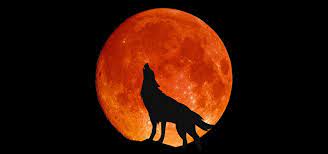
Cautiously, the hunters collectively carry the half of the animal back behind the tree line. A whistle can be heard to motion to the old hunter they are clear and the crackling of snow tells him they are moving away. He rises, his form caught in the full moon. A scar on his own face, a hand wrapped up too tightly to have all the fingers. Slowly, backwards, a slight limp on one side from the passage of time on his frame. As the moon light fills the opening again and the hunter joins the tree line. The old wolf paws the ground, to begin sharing the meal with the pack that moves out of the trees.

The wolf pack will feast on the food to survive another day. As both aged hunters know, the truth for hunting in scarce times, it knowing when to hunt, when to lose, when to attack.